
Fast track to launching B2B customer experiences that convert
Roll out and update engaging buying experiences in record time
— with native B2B features built in from the start.


Quick time to market through faster development
Launch MVPs and storefronts in a flash with Intershop’s native CMS and open-source, responsive frontend.
Pre-connected with all core commerce functions, you can go live faster and with less implementation cost.


Key capabilities
Creating B2B buyer experiences is easier with Intershop. Start with ready-to-use, designed-for-B2B features, and extend and customize as you grow with open-source, headless flexibility.
Preconnected, powerful capabilities for global B2B commerce
Fine-grained catalog management, ultra-customizable promotions, omnichannel, multi-locale support and more are all pre-integrated and at your fingertips in a native content management system.
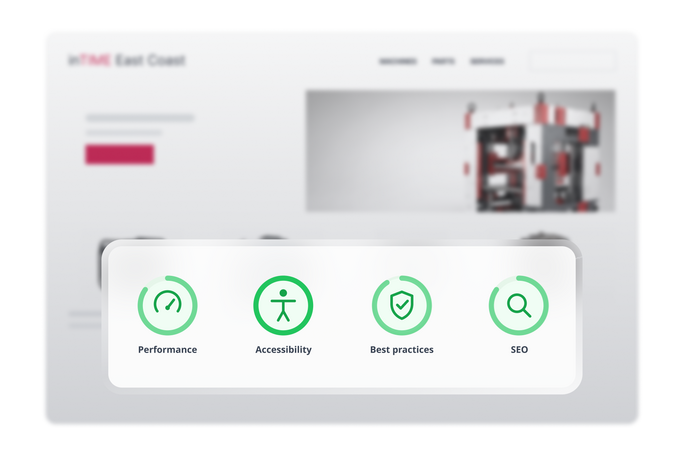
Lightning fast, accessible storefronts
The PWA frontend delivers fast load times, a responsive layout and WCAG 2.2 AA accessibility compliance, lowering bounce rates, reducing barriers to conversion, and assuring all your customers can navigate your shop with ease.
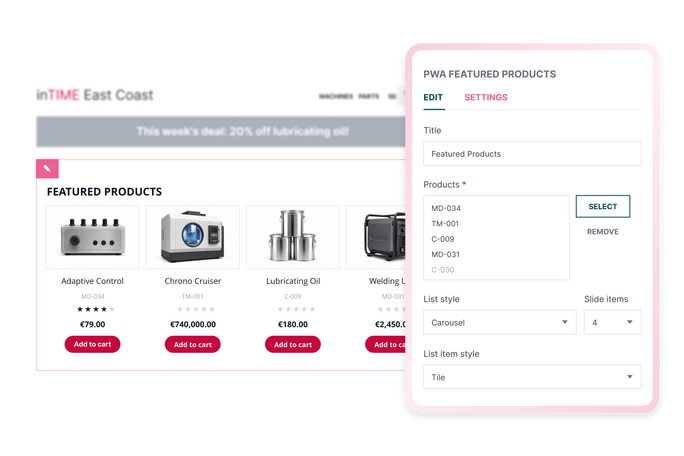
Visual editor makes content changes a snap
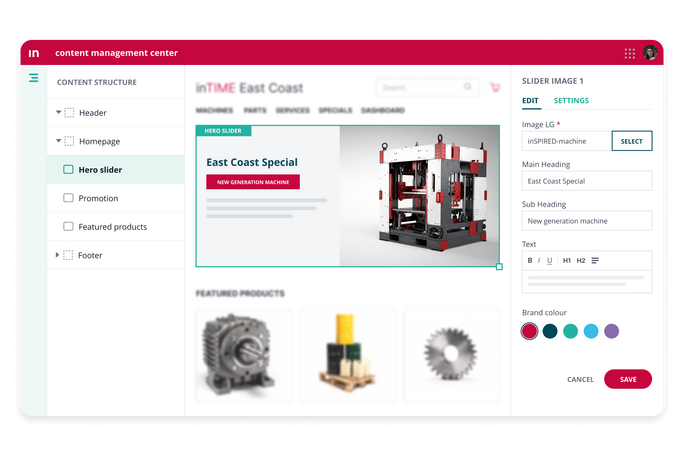
Empower your content editors to easily edit storefront elements, pages, page structure and promotions using the Design View, a visual editor for the ready-to-use storefront.
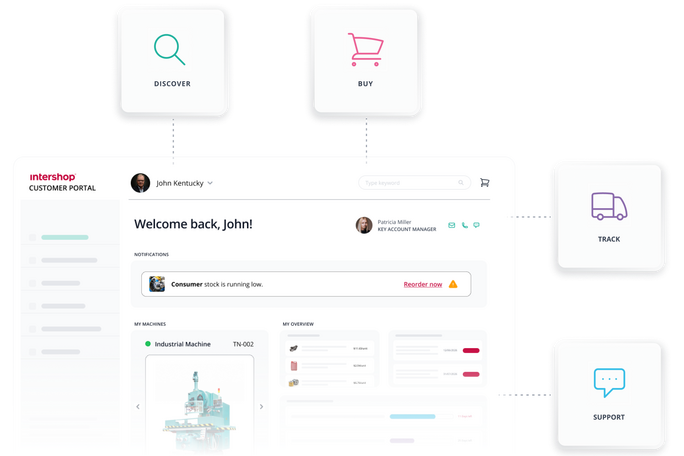
Create custom B2B experiences tailored to individual customers
The open-source frontend is built for easy customization. Personalize the experience to logged-in buyers and use customer data to boost aftersales revenues and increase customer lifetime value with upselling and services.
Go headless with any CMS or touchpoint
Bring your own CMS or connect with custom touchpoints like voice ordering, digital in-store and more. Integration is easy thanks to the platform’s REST-API-based architecture.
How businesses are bringing new customer experiences to market faster — with room to grow
“Intershop is the perfect solution for us. The platform is reliable and powerful, can be flexibly adapted to the complex organizational structures of B2B commerce, and also offers all the functions for a rapid rollout of digital sales channels. As a result, we were able to successfully go live with our first B2B online shop for the Spanish market within just three months.”
IT Director at Teka

Features list
- Native CMS built for large-scale, global, omni-channel commerce
- Pre-integrated with powerful B2B commerce functionalities
- Visual editor makes content changes to storefront simple and intuitive
- Open-source frontend is easy to adapt and customize
- Accessible: WCAG 2.2 AA compliant
- Responsive: Fluid navigation on any device
- Headless-ready and API-first for easy integration of any CMS, frontend or touchpoint

Resources

Explore how to unlock the full potential of personalization in B2B e-commerce with AI.
Download whitepaper
Unlock new revenue streams with the right architecture and data strategy.
Watch webinar
How personalized search and AI recommendations improve B2B buying experiences.
Read this articleDigital Experiences - Frequently asked questions (FAQs)
Intershop supports creating digital B2B buying experiences a native CMS, pre-integrated B2B commerce capabilities and a flexible open-source PWA frontend. These toolsy help B2B companies quickly launch, manage and personalize digital storefronts and customer portals across multiple channels.
Intershop’s digital experience capabilitiess are designed for B2B companies such as manufacturers, wholesalers and international organizations with complex catalogs, customer-specific pricing, multiple markets or digital self-service requirements which want to launch storefronts or customer portals quickly.
Intershop’s digital experience tooling, including the native CMS and open-source PWA frontend, is preintegrated with all core platform includes capabilities. This includes for example complex catalog management, customer-specific pricing, promotions, omnichannel commerce, multi-locale support and personalized customer experiences.
Yes. The platform follows a headless and API-first approach. Companies can connect their preferred CMS, frontend or digital touchpoint, including customer portals, voice ordering and in-store applications, through REST APIs.
The responsive PWA frontend is designed for fast loading times, flexible layouts and accessible user experiences. Intershop states that the frontend supports WCAG 2.2 AA requirements; the actual level of conformance depends on the specific implementation, components and content.