
Tailored B2B e-commerce solutions for your business needs
Make buying easy with sales support at every step of the B2B customer journey, on every digital and traditional sales channel.







Unlock new business potential with
B2B commerce
Today’s business buyers need to find the right products, services, and spare parts - fast! They also want a convenient shopping process that exceeds their expectations. Intershop's B2B Commerce Platform addresses all these needs and more, allowing you to:
Increase customer value
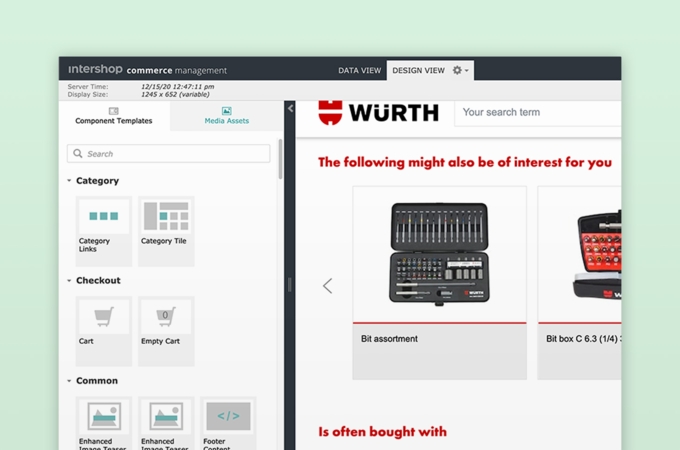
Offer additional products to your customers based on their specific needs, agreements, and pricing to increase the overall share of wallet.
Reduce costs per customer
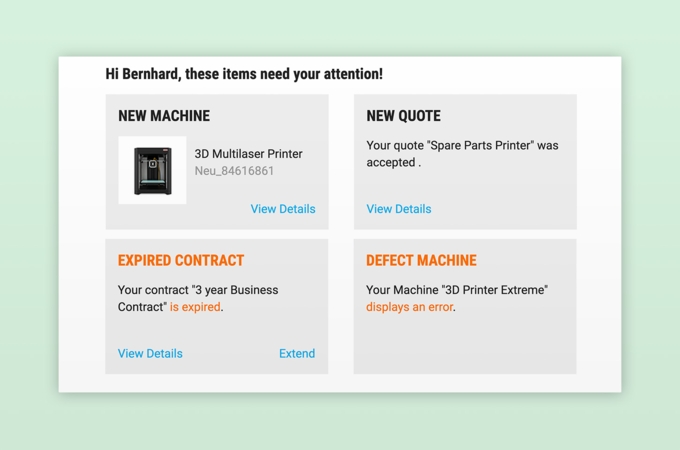
Use self-service options to streamline communications, save time and money, and shift your sales team’s focus from taking orders to building relationships.
Drive your B2B commerce sales
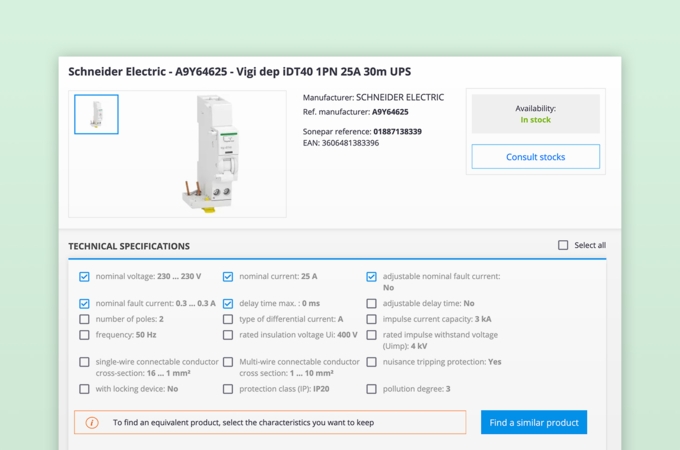
Help potential global buyers discover your products and turn them into repeat customers. Ideal for even the most complex products, via direct sales, partners or marketplaces.
Enter new markets
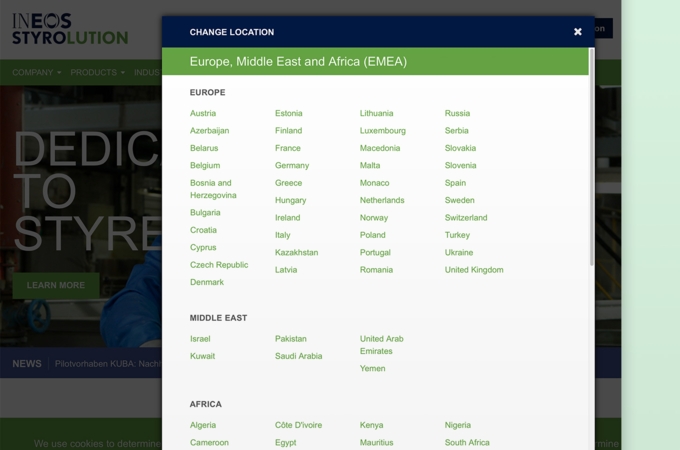
Take advantage of unlimited international expansion opportunities to reach new markets your dealers haven’t tapped.

“The average shopping cart has increased by 25% among our pilot customers.”

“The Intershop Commerce Platform convinced us with various standard B2B features and high scalability supporting 38 online shops worldwide.”


“Our initial growth goal for year one was to drive a 10% increase in new online customer registrations. After the first six months, we saw an increase of over 22%!”
Discover why the world's leading B2B companies choose the Intershop Commerce Platform
Intershop is the engine that drives digital commerce. Our powerful B2B e-commerce platform enables the world’s leading manufacturers and wholesalers to transform their business and increase revenue in a digital-first world.
Our cloud-based solutions give you an essential foundation for digital success, plus the flexibility to deliver unique experiences and quickly react to changing needs. With a global presence and extensive partner network, we support your success every step of the way – creating opportunities to scale, innovate, and gain a competitive edge.
Intershop is "Built to boost". Are you ready to exceed your customers' expectations?
Benefits of the Intershop Commerce Platform:
Experience the power of a complete B2B e-commerce platform with rich out-of-the-box functionality (e-g. custom catalogs and pricing, user roles and responsibilities, quoting, customizable order templates, etc.) that allows you to create a personalized customer experience.
- Serves multiple business models and organizational structures.
- Supports hundreds of thousands of products, orders, order lines & custom price lists.
- Turn visitors into buyers by allowing you to create high-end, consumer-like customer experiences.
- Helps you boost retention with b2b customer portals that support the full customer life cycle.
- Empowers you to extend brand(s) consistently across traditional and digital channels, anywhere in the world
- Supports your field sales on-site with time-saving workforce apps.
Reduce time to market
B2B e-commerce can be far more complex and volatile than B2C e-commerce. Save time and money rolling out new sales channels, thanks to our ready-to-use blueprint store. With responsive design, optimized for desktop and mobile alike, the store comes with B2B-specific workflows and processes, and demo content which is easily customized.
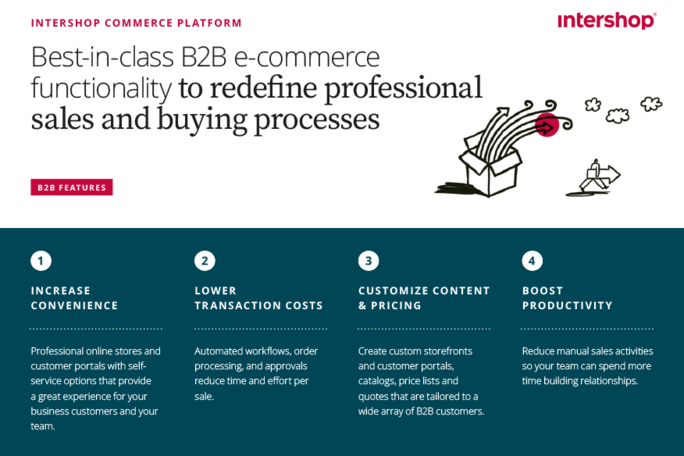
Best-in-class B2B e-commerce functionality to redefine professional sales and buying processes
Want to offer your customers a better digital purchasing experience? With Intershop’s out-of-the-box B2B features, you can deliver outstanding e-commerce functionality while streamlining your entire order and fulfillment process.
B2B e-commerce for wholesalers and manufacturers
Whether you are a manufacturers distributing your own products to wholesalers, or you are a wholesaler involved with retailers or distributors, each business model has their own challenges and solutions. Here's how B2B e-commerce can become the foundation of your long-term success:


Current B2B e-commerce topics

What the leaders in B2B are talking about.
Read more
The conversion rate is one of the most important KPIs in B2B
e-commerce.

What is autonomous commerce and how is it going to revolutionize the sector?
Read moreFrequently asked questions about
B2B e-commerce
B2B e-commerce (business-to-business) refers to the buying and selling of goods and services between two or more businesses through an online platform. This type of e-commerce involves transactions between manufacturers, wholesalers, distributors, or retailers who conduct their business with other businesses. In B2B e-commerce, the purchasing process is typically more complex and involves larger volumes of transactions, higher order values, and longer sales cycles compared to B2C (business-to-consumer) e-commerce. B2B e-commerce platforms can provide various features and functionalities that cater to the unique needs of businesses, such as account-based pricing, custom catalogs, bulk order processing, and integration with back-end systems.
The benefits of B2B e-commerce include:
Increased efficiency: B2B e-commerce can streamline the ordering process and eliminate manual data entry errors, reducing the time and effort required to complete transactions.
Improved customer experience: B2B e-commerce platforms can offer a personalized and user-friendly experience for buyers, with features such as customized pricing, order history, and quick reordering.
Expanded market reach: B2B e-commerce enables businesses to reach a wider customer base, regardless of geographic location or time zone, through online channels.
Enhanced data insights: B2B e-commerce platforms can provide valuable data insights into customer behavior and preferences, enabling businesses to optimize their sales and marketing strategies.
Increased sales and revenue: B2B e-commerce can lead to increased sales and revenue by reducing costs, expanding market reach, and improving the customer experience.
To succeed in B2B e-commerce, it is essential to have a well-defined plan in place. Before beginning the development of your B2B website, it is important to identify your goals and determine the necessary functionalities your online shop will require.
In today's digital age, over 75% of B2B buyers make their purchases online and expect a seamless e-commerce experience that is on par with B2C shopping. This includes intuitive navigation, quick access to key product information, and a self-service options.
To meet the needs of your customers and achieve your business objectives, it is vital to structure a smooth digital experience. A solid foundation can be established through the creation of an B2B e-commerce website requirements document.

Want to learn how Intershop Commerce Management can transform your business?
Intershop is the leading choice for the world’s most successful B2B organizations. Get in touch with one of our specialists or book a demo to find out why.